- Money Masters Newsletter
- Posts
- Jobs Signal a Slowdown, Ramp Hits $40 Billion, and Shake Shack Collapses!
Jobs Signal a Slowdown, Ramp Hits $40 Billion, and Shake Shack Collapses!
Money Masters' Market Kickoff Week 20
In partnership with

Dear Money Master,
The jobs report dropped Friday and the headline looked fine, until you read what's underneath. Healthcare is carrying the whole economy while tech quietly bleeds thousands of positions. Something is shifting.
Meanwhile, a fintech startup nobody outside finance is talking about just hit a $40 billion valuation in six months flat, and a beloved burger chain reminded Wall Street why "revenue" and "profit" are never the same thing.
📚 Money Masters Article of the Day
How Much Cash Should You Actually Have 💸
Most people know they should have some cash set aside. But almost nobody knows how much is actually the right amount. Keep too little and one unexpected bill derails everything. Keep too much and inflation quietly eats it year after year. There is a number that makes sense for most situations and understanding it changes how you think about every idle dollar in your account. One article a day to transform your financial future. TAKE THE CHALLENGE!
📰 Your Daily Financial Digest - May 11th, 2026
🌍 Economics:
America Added 115,000 Jobs in April But the Real Story Is What's Disappearing!📊 READ MORE
The U.S. added 115,000 jobs in April, twice what economists expected, but well below March's 185,000. Unemployment held at 4.3%. Healthcare led with 37,000 new jobs, while information services quietly shed 13,000, down 342,000 positions since late 2022.
Here's the concept worth understanding: nonfarm payrolls. This is the government's monthly count of every job added or lost across the economy, excluding farm work (which swings wildly with seasons). It's the clearest read we have on whether businesses are hiring or pulling back.
The 4.3% unemployment rate sounds healthy and technically it is. But look past that number and the picture gets more complicated. A broader measure that includes discouraged workers and part-timers who want full-time work hit 8.2%. The labor force itself shrank. Fewer people are even looking for jobs. That's not strength, that's quiet exhaustion.
The 342,000 information-sector jobs lost since AI's rise began isn't a coincidence. It's a trend. Investors are watching because a softening labor market cools inflation, which gives the Federal Reserve room to cut interest rates. That's good for stocks, but only if the cooling doesn't tip into collapse. Right now, we're walking that line.
💻 Technology:
Ramp Just Hit a $40 Billion Valuation, 6 Months After Being Worth $32 Billion! 🚀 READ MORE
Ramp, a corporate expense management startup, is reportedly raising $750 million at a valuation north of $40 billion, up from $32 billion just six months ago. The company crossed $1 billion in annual revenue last year, doubling its income in twelve months. VCs can't stop writing checks.
The concept here is pre-money valuation. Before new investors put money in, both sides agree on what the company is worth today, that's the pre-money figure. Investors then add their cash on top, which becomes the post-money valuation. It's how startups get priced without public stock markets doing it for them.
So why is Ramp worth $40 billion? Two reasons stacked together: explosive revenue growth and an AI story that investors believe. Ramp isn't just a corporate credit card anymore, it's embedding AI agents that block unauthorized purchases, detect fraud, and automatically move idle funds into interest-bearing accounts. That's not a feature. That's a reason to own the product instead of switching.
In venture capital, when growth and AI narrative collide, valuations move fast. Ramp is proof that the companies building AI into existing workflows, not just talking about it, are the ones capturing the most investor attention right now.
💹Earnings:
Shake Shack Just Lost $2.6 Million. Here's the Hidden Math Behind Fast Food's Biggest Trap! 🍔 READ MORE
Shake Shack reported quarterly revenue of $367 million, close, but still below Wall Street's $372 million estimate. Earnings per share came in at zero, against a 12-cent expectation. The company posted an operating loss of $2.6 million.
The concept: operating loss. Revenue is what a company collects. Operating profit, or loss, is what's left after paying to actually run the business: staff, ingredients, rent, utilities. If you're burning more than you're earning just to keep the lights on, you have an operating loss. It's the clearest sign that the core business model isn't working yet at scale.
Shake Shack's problem isn't the brand, people still love the burgers. The problem is cost. Beef prices remain elevated. Winter storms hit foot traffic in key markets. The Middle East conflict disrupted dozens of licensed locations, slowing inbound tourism at high-traffic spots. And the company is accelerating new store openings, which costs money before a single shake is sold.
This is the fast casual trap: high-quality ingredients, premium positioning, but fixed costs that don't flex when sales dip. Every empty table still costs money. Investors were already waiting for proof that Shake Shack could convert growth into real profit. This quarter answered in the wrong direction and the stock paid for it immediately.
5 Defense Stocks Most Investors Haven't Found Yet

AI-integrated systems. Satellite infrastructure. Advanced aerospace platforms. Five companies are winning significant Pentagon contracts in each, and we profiled all of them in one free research report.
Voice dictation that doesn't mangle your syntax.
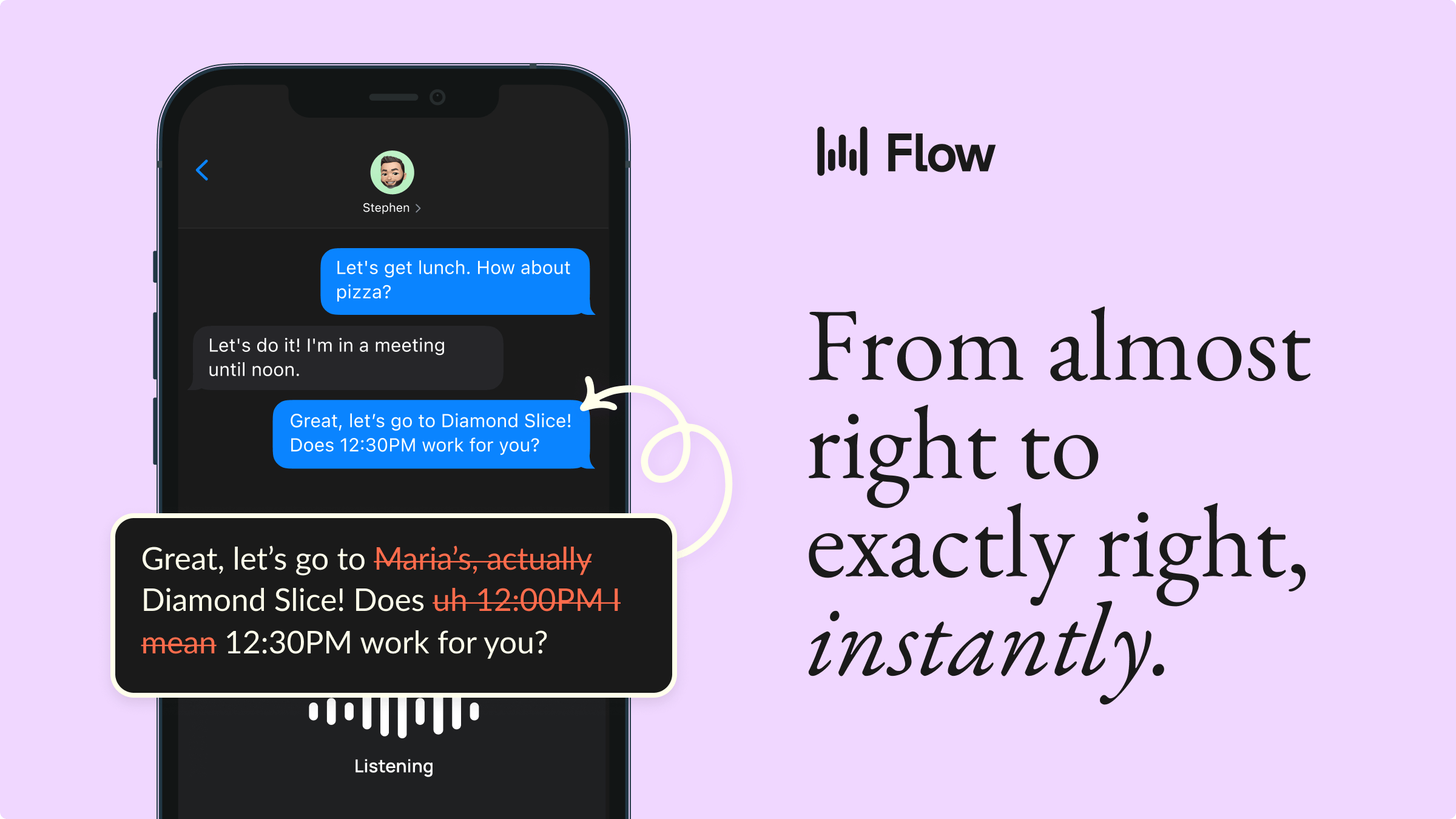
Most dictation tools choke on technical language. Wispr Flow doesn't. It understands code syntax, framework names, and developer jargon — so you can dictate directly into your IDE and send without fixing.
Use it everywhere: Cursor, VS Code, Warp, Slack, Linear, Notion, your browser. Flow sits at the system level, so there's nothing to install per app. Tap and talk.
Developers use Flow to write documentation 4x faster, give coding agents richer context, and respond to Slack without breaking focus. 89% of messages go out with zero edits. Free on Mac, Windows, and iPhone.
To your financial empowerment, The Money Masters Team
P.S. Stay connected! Don't forget to follow us on social media! 📱🌐
DISCLAIMER: This information is for educational purposes only and does not constitute financial advice. The publisher does not accept any responsibility for any losses incurred as a result of actions taken based on the information provided. Always conduct your own research or consult with a financial advisor before making any investment decisions.