- Money Masters Newsletter
- Posts
- America's Confidence Crash, Gas Hits $4, OpenAI's $122 Billion War Chest, Tesla's Delivery Slip!
America's Confidence Crash, Gas Hits $4, OpenAI's $122 Billion War Chest, Tesla's Delivery Slip!
Money Masters' Market Pulse Week 14
In partnership with

Dear Money Master,
America's confidence is cracking. 📉 Gas is closing in on $4 a gallon, the stock market has shed 7% since the Iran conflict began, and consumer sentiment just hit its lowest point of the year. We break down what's really happening to the American wallet and why the Fed is watching one number more nervously than any other.
Then OpenAI just pulled off the largest fundraise in AI history at $122 billion and an $852 billion valuation. We explain exactly how private companies raise money at these staggering numbers and what it signals about what's coming next.
Finally, Tesla missed its delivery target again. 🚗 But the real story isn't the miss. It's what they are quietly building while everyone argues about Elon.
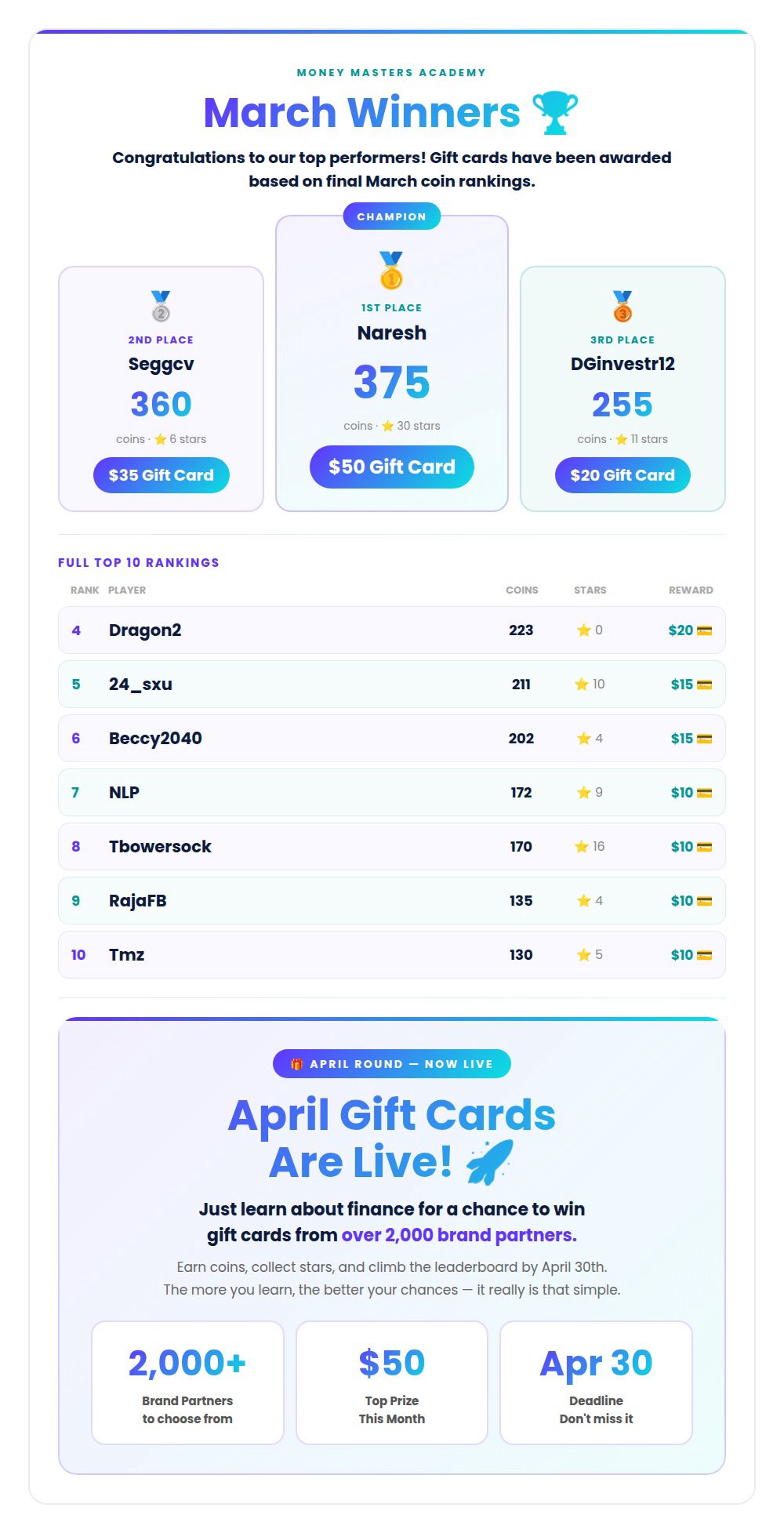
🏆 And before we get into it, congratulations to our March Money Masters competition winners. Your gift cards are on their way. April is live, the leaderboard is open, and we have new content and fresh rewards waiting for our best learners. More details below.
📚 Money Masters Article of the Day
When the World Goes to War, What Happens to Your Money? 🌍📉
Markets have lived through wars before. Many of them. And the patterns that emerge across different conflicts, different eras, and different parts of the world are genuinely surprising. Because history shows that what happens to your money during conflict is almost never what you expect. One article a day to transform your financial future. TAKE THE CHALLENGE!
📰 Your Daily Financial Digest - April 3rd, 2026
🌍 Economics:
America's Mood Is Cracking, Gas, Stocks, and the War Nobody Priced In! 📉 READ MORE
Consumer sentiment just dropped 6% to its lowest point this year. Gas prices have surged 33% since the Iran conflict began, the stock market is down 7.3%, and Americans' short-term economic outlook plunged 14% in a single month. Middle and higher-income households, the ones who actually drive spending, are the most rattled.
Here's the concept you need to understand: consumer sentiment is essentially a national mood survey. Economists track it obsessively because consumer spending makes up roughly 70% of the U.S. economy. When people feel good, they spend. When they feel uneasy, they pull back, and that pullback echoes across everything from retail sales to corporate earnings.
The dangerous detail here is inflation expectations. Households now expect prices to be 3.8% higher in 12 months — the biggest single-month jump since April 2025. That number matters because the Federal Reserve uses inflation expectations as a forward signal. If people expect prices to rise, they behave differently: they demand higher wages, businesses raise prices preemptively, and actual inflation follows. It becomes a self-fulfilling loop.
The Fed held rates steady at 3.5%–3.75%. They're watching carefully, and so should you.
💻 Technology:
OpenAI Just Raised $122 Billion. Here's the Real Reason Why!🤖🚀 READ MORE
OpenAI closed its largest funding round ever, $122 billion at an $852 billion valuation. SoftBank, Andreessen Horowitz, Amazon, Nvidia, and Microsoft all participated. The company is now generating $2 billion in revenue per month, claims 900 million weekly active users, and says it's growing revenue four times faster than Google or Meta did at the same stage.
Here's what this raise is really about: private market valuation. OpenAI isn't publicly traded, so it can't sell shares on the stock market. Instead, it sells ownership stakes directly to sophisticated investors, sovereign wealth funds, venture firms, major corporations, who believe the company will be worth far more later. The $852 billion figure is what those investors collectively agree the entire company is worth today, based on current revenue and growth trajectory.
But there's a second layer here. About $3 billion of this round came from everyday investors through bank channels, and OpenAI is being added to ARK Invest ETFs. That's deliberate. They're widening their shareholder base before an IPO, essentially auditioning for the public markets in real time.
When a company's fundraising press release reads like an IPO prospectus, the message is clear: the public offering isn't far off.
💹Earnings:
Tesla Missed Again. The Story Isn't the Miss, It's What Comes Next!🚗READ MORE
Tesla delivered 358,023 vehicles in Q1 2026, below the analyst estimate of 370,000. Shares dropped 3%. While deliveries improved 6% from a year ago, that follows two straight years of annual declines. The flagship Model S and X are done. The Cybertruck never broke through. And the Model 3 and Y now account for 97% of everything Tesla sells.
The key concept here is delivery numbers as a leading indicator. For Tesla specifically, quarterly deliveries are the closest thing to a real-time sales report. Analysts build earnings models around them, so when deliveries miss, it cascades into lower revenue expectations, lower profit forecasts, and lower stock price targets. The miss wasn't catastrophic, but it wasn't clean either.
What makes this quarter interesting is the energy business. Tesla deployed 8.8 gigawatt hours of battery storage, down from a record 14.2 GWh last quarter, but still significant. Megapack and Powerwall sales don't get the headlines, but they carry strong margins and don't depend on Elon Musk's public image.
Investors are watching whether Tesla can execute on Cybercab and Optimus robots before the Model Y runs out of runway. Right now, it's a company still living off one product family while betting everything on two that don't exist yet at scale.
Your AI is resolving tickets. Is it keeping customers?

Resolution rates look great. But Gladly's 2026 Customer Expectations Report reveals the metric most CIOs are missing — and what the data says about where AI investments actually translate into retention, not just throughput.
Your tax bill is bigger than your investment portfolio
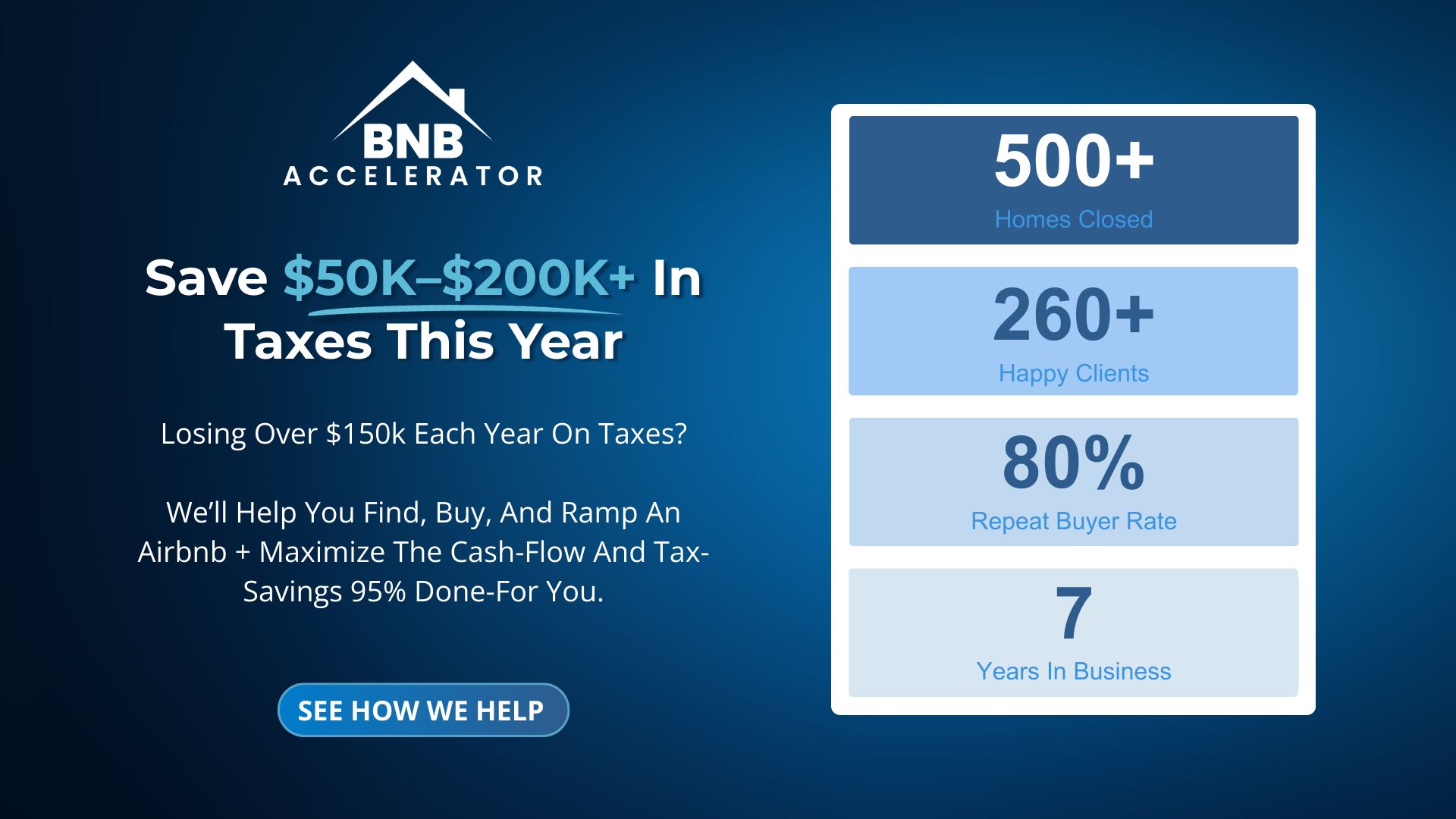
You're making great income and losing half of it to taxes every year. Cash-flowing Airbnb properties fix both sides: real tax savings and monthly income without you becoming a real estate operator.
We handle 95% of it. 500+ properties closed for 260+ clients in four years. 75% come back for property number two because the first one actually works.
We are not a tax firm. Not licensed CPA’s, and we do not represent ourselves as such.
To your financial empowerment, The Money Masters Team
P.S. Stay connected! Don't forget to follow us on social media! 📱🌐
DISCLAIMER: This information is for educational purposes only and does not constitute financial advice. The publisher does not accept any responsibility for any losses incurred as a result of actions taken based on the information provided. Always conduct your own research or consult with a financial advisor before making any investment decisions.